In his recent article on „Informal historical learning at home“ in History Education Research Journal (HERJ), in which Christoph Kühberger explores non-formal, private forms of historical thinking in children before any formal schooling, applying ethnographic methods, here refers to different to models of historical thinking, citing me with the statement
„The question of whether historical thinking at home operates differently from an academic historical thinking expected in school-based historical learning has not been explored. Instead, Andreas Körber (2007, 2018) conceptualised an explanatory model suggesting that an elaborate form of historical thinking, which would be close to academic standards, evolves from a basic version possessed by all individuals. His framework assumes that there is only one mode of engaging with the past and history, which could be refined through formal education (Körber, 2007, 2018).“ (Kühberger 2025, 7)
I think that this reference does not fully capture my position. Kühberger obviously refers to the FUER-model (the credits for which are solely mine, but are due to a whole group of colleagues; Schreiber et al. 2006; Körber et al. 2007; Körber 2007), and its underlying procedural model („Geschichtsbewusstsein dynamisch“) by Wolfgang Hasberg and myself (Hasberg/Körber 2003); and in this combination especially to two features of this, namely a) the structuring of historical thinking in general in that model after the underlying circular model which Jörn Rüsen initially used for describing the (ideal-typical) procedures of academic historical research as linked to everyday („life-world“) needs for historical orientation, and which I subsequently used for positing that the division of labour hinted at there (with the „life world“ having orientational needs, academic research picking them up, transferring them into archival research and generating orientational narratives which in turn are fed back into the „life-world“, should be read with one caveat: While there is great value in Rüsens (1983) conceptualisation of academic historical research being both initiated by and directed towards societal orientational needs rather than mere and pure academic discourse, it should not lead us to infer that there was no (or at least no valid) research-like historical thinking possible outside of academia – in the „life world“. Instead, in 1999 (English: Körber 2015), I (not as the first one to do so) stressed that meaning- or sense-making narrating also take place outside of academia in meaningful and orientating form, and that the specific position and role of professional academic historiography and research lies in its chance and duty to perform these tasks with special scrutiny by constant methodological rigour and reflection. It is this methodological and reflective rigour and (co-)control which distinguishes academic history from non-academic forms, not any kind of unique claim to validity of narratives (cf. Körber 2015 for an English version).
I am quite confident that Kühberger will agree with me here.
Similar (but not fully identical) forms of interrelating professional (academic) and non-academic historical thinking underpin quite a few professional conceptualizations of historical thinking and learning. The mere fact that formal history education in schools have developed towards forms of disciplinary orientation („Wissenschaftsorientierung“), applying concepts, methods, terminology of academic history not only in historiographic texts to be read, believed and internalised by students, but into facets of „content“, that historical thinking has been formed into content itself in quite different traditions of schooling, speaks to this – even if some premises are different. While e.g. Sam Wineburg (1999) holds that historical thinking following the academic model is not natural but in fact un- or possibly even counter-natural and needs to be taught against an intuition of „presentism“, I do in fact hold, that historical thinking is „natural“ and rather needs to be elaborated that implemented in peoples‘ minds from scratch against their nature.
The second point Kühberger obviously refers to is the differentiation of „niveaus“ (levels) of historical thinking within the FUER-model (Schreiber et al. 2006; Körber et al. 2007; Körber 2007), In that differentiation, the intermediate niveau is characterised as being given, when a person (student) is able to refer to and employ conventional concepts, methods etc. in their own historical thinking, while the elaborate niveau is defined by the ability to not only refer to employ those concepts, methods etc., but to reflect on them. Here again, the role model of academy is quite visible: Some kind of rigour in concepts and methods, and the (constant) reflection on their validity, limitations, etc.
But does all this mean there there is „only one mode only“ of engaging with the past? I don’t think so.
To some degree, it may be a question of scale or grade of abstraction. What is „one mode“? In Sam Wineburg’s approach, the model of academic historical thinking seems to be mich more narrowly defined as in my understanding. It is this way of hard-learned non-presentist thinking, of prior acknowledging the alterity of the past showing in primary documents stemming from other times, which defines valid historical thinking, and this form is what therefore need to be taught, maybe not fully replacing other modes, but to a great extent. My Rüsen-based think is quite different. For me, the academic forms of historical thinking is not so much a benchmark but rather a specific characteristic form with a rather wide range of forms of historical thinking. But as such, it — academic historical theory, that is — provides for the conceptual, terminological and methodological elements for a rather general and encompassing modelling of what historical thinking is about: orientating in time. The purpose of our (Hasbergs and mine, the FUER-group’s) models Kühberger refers to, is not so much (or: at all) prescriptive in that this a specific form of historical thinking is postulated as a normative goal for (the only) „valid“ form of historical thinking, not as the final form of a kind of natural development of such thinking – like in maturation-based models of development.
At least for me, they rather are meant analytically: If we want to compare and interrelate different empirical modes (!) of engaging with the past, we need some common, overarching concepts into which they are not squeezed like into a Procustrean Bed, but rather by which they are identified as having more or less (!) similar functions (and possibly forms) within a common individual and collective mental and communicative operation: orientating in time. And is both the impossibility of finding any model which does NOT refer to some empirical form of relating to the bast as a basis for such modelling and the aspect of professional historiography and research to have a special duty and chance to elaborate not only concrete histories but also to critically reflect upon and develop abstract concepts, methods, etc., which justifies to derive the encompassing model from there.
At least as far as Kühberger refers to the cited models of Hasberg/Körber and FUER, these are rather meant as analytical models of historical thinking than as prescriptive models for it and its teaching. But even after this clarification, two questions linger:
- Does such usage of an overarching model — even if applied analytically not amount to championing a kind of „etic“ approach – especially when such models are applied to historical thinking in different „cultures“ and cultural groups? Does it not amount to positing a kind of „neutral“ and therefore „scientific“ way of understanding historical thinking which disregards the differences in real meanings of specific modes and forms in favour of establishing functional comparability? To use Western historical academe as the pivotal point of modelling indeed poses the not only theoretical danger of exerting some prescriptive power in favour of Western thinking, not only taking it for normal, but positing it as the norm.
- And: Does such an ‚etic‘ approach not disregard that (especially in this case) the overarching model is in fact anything but „neutral“, devoid of its own cultural and societal specificity, neglecting that it has been derived from a specific cultural and societal mode – Western academic history and historical thinking? Is this not indeed a case of „scholars“ being themselves „creatures of their scientifically and naturally categorised linguistic [here: cultural] environment“, not recognising the „local“ or „culture-specific nature of their own point of view“ (Pike 1990b: 68; quoted after Mostowlansky/Rota 2020, p. 6)?
In fact, Kühberger’s own approach seems much more to follow the lines of an „emic“ approach, championing efforts to understand other cultures of „engaging with the past“ in their own terms, to identify of specificities of historical thinking modes both with respect to cultural differences and within individual learning development from the „inside“ of the respective cultures and age-specific practices. And this approach has its merits. It not only ventures to understand different practices and modes of „engaging with the past“ by „their own standards“ (as far as they can be discerned), not only identifying, but accepting, acknowledging and recognising their respective functioning.
However: In how far is there some danger in this approach, also? While it surely is not only welcome but necessary to identify the different modes in their own logic — what does it take to identify them as „historical thinking“ — as variants of a common (human) if not practice, so venture — to „engage with“ „the past“ for a kind of common purpose? This purpose of subsuming a wide spectrum of different practices as „modes“ of a common venture seems to habe its own value – both for what may be called „inter-cultural“ relations and for addressing the question of developing common (not: unified) approaches to needs of temporal orientation in the light of problems that transgress traditionally „cultural“ ranges: the anthropocene and climate crises, new world orders, globalisation as such, trans-humanism etc. In short: so we not need some kind of common, overarching model of what historical thinking is about, what its purpose is (historical orientation?), how it works in terms of some abstract theory?
The etic/emic-distinction itself has its limits and may even present an impasse if the two approaches are taken as strict alternatives. The original inventor of the distinction in linguistics, Kenneth Pike saw them not only as „‘two basic standpoints from which a human
observer can describe human behaviour, each of them valuable for certain specific purposes“, but rather „two elements of a stereoscopic image“; Pike 1954, p. 8; 12; quoted after Mostowlansky/Rota 2020; p. 2, 3). Both approaches therefore aren’t mutually exclusive. If research uses emic approaches only, it loses the perspective of „functional equivalences“ of different practices and concepts, whereas only applying „etic“ (i.e. abstract, top-down) comparative approaches, one risks standardisation where diversity is to be recognised. What is called for, I think, is not only a constant inter-relating of emic and etic approaches which may help to interrelate the phenomena of engaging with the past, but even more a transgression of one of the premises of that approach in terms of conceptualising „culture“ towards trans-cultural approaches sensu Wolfgang Welsch (1999), Hansen (2011) and Rathje (2007/2009). Especially the latter’s concept of cultures as not being defined by unifying their ‚members“‚ perceptions into homogeneity, ways of thinking, practices etc. („culture als mold“; Rathje 2007; p. 262), but rather connecting different individuals across their individual differences („culture als glue“), opening space for „culture“-transgressing „intercultural action“ that not interrelates given different practices, but creates new familiarities between members of „different cultures“ (Rathje 2007, p. 263). According to this understanding, cultures are by no means maximally homogeneous internally and maximally differentiated externally, but rather characterised by “internal” differences between their members, which are, on the one hand, linked by an effect of cultural practices that creates cohesion rather than coherence and, on the other hand, enables cross-cultural cohesion.
This understanding of culture and this perspective by no means removes all reservations against the use of (Western) academic historiographical concepts to model an overarching analytical model of historical thinking. But it does at least make it possible to address the aporia raised in the etic/emic discussion that the “construction of an ‘etic’ overarching model would require a departure from one’s own culturality. To not be able to derive a model from some Archimede’s Point outside any actual empirical convenience of relating to what we call „the past“, to times being gone and their relevance for and relation to „the present“ and „the future“ brings about some form of bias to the concrete modelling. So, yes, these models have some bias with regard to professional, academic and Western forms of such relating-practices and concepts.
However, there is now a conclusion possible: The task in making and using such models is a two-sided one: There is an obligation to try to both „subsume“ ever more different modes „under“ them — not by aligning them in a Procrustean-Bed-logic into them, but rather by a bidirectional operation: a) to capture their logics and specificities in terms of the general model of what „engaging with the past“ is about, and in the same turn by broadening and elaborating the model’s logic and understanding — without dissolving it so that all it’s inter-relational analytical power is gone.
This applies to differences in modes of historical thinking in at least three dimensions:
- (a) in „inter-cultural“ perspective, modes of „engaging with the past“ need to be analysed both with regard to their „inner“ logics and meanings, their specificities and with regard to their relation to an overarching model – especially in times where „cultures“ are not only theoretically non-homogeneous, but almost all people have been formed in their thinking by quite different influences – including Western Concepts. This also is at the back of my repeated plea for using the concept of „historical consciousness“ analytically (Körber 2005; 2024): We should reserve the concept of „historical consciousness“ neither for the specific condition of humans in western modernity nor even for the adult, developed, form of thus relating to „the past“, but use it as a referent for all mental forms of relating to temporal alterity. Anyone, then, has a historical consciousness — but the concrete forms can -and will vary — depending on socialisation, enculturation, collective and individual experiences and also on specific traits of the individual. And: The concept historical consciousness in this understanding is by no means an „empty formula“, but rather the concepts which allows to compare and interrelate different conceptions of time and temporal change, alterity, dispositions and attitudes to it, ways of addressing and dealing with it, of sense- resp. meaning-making, of conceptualising the past and its meaning as something which is common and even belonging to some group or the other, etc. Historical Consciousness thus would neither refer to Western Concepts only (even though borrowing the western and academic terms „history“ and „consciousness“) and it does not only refer to a status, but also to attitudes to and abilities for dealing with the constructionist and plural but not arbitrary natured of references to it.
- (b) in the temporal dimension of historical development of historical thinking. In this perspective, we may not reserve the term „historical thinking“ for modern versions only, just because our concepts and terminology is specifically modern. Even though „historical consciousness“ has been identified as a mental form of relating to time specific to the conditions of modernity, there is no value in rejecting any comparative and other interest in „historical consciousness“ of pre-modern times. The same hold true for „history“ and for „historical thinking“. We just may not simply identify such pre-modern (antique, medieval, …) history, historical consciousness and historical thinking with their modern counterparts. Instead, we must (and do) try to identify the specificities in their conditions, modes, concepts, etc. – and to adopt our modern-informed models along the way so that they neither dissolve their analytical power nor press these older modes into their concepts.
So in fact I do not hold that there one one mode of engaging with „the past“ only, but rather that we need to interrelate different modes of doing so — with regard to a) „phylogenetic“/temporal/historical developments (history of historiography and of historical thinking), b) „cultural“ and societal diversity, and c) ontogenetic/individual development of such thinking along the „formative“ and even subsequent years (life cycle), — but also by developing an encompassing, covering model of what makes this thinking „historical“. Here, them, the perspective of teaching and learning becomes central – and again a formulation within Kühberger’s quote needs differentiating: I neither believe that individuals (learners) automatically (far from formal schooling) develop their mode of engaging with things past towards the standard academic model, nor that their non-academic modes of doing so should be replaced by that (Western) academic model. I rather believe that it is one (if not the) necessary task of schooling to enable students to more-and-more interrelate their own (personal, individual as well as socially developed) historical thinking (their ‚theoretical‘ conceptions, insights, concepts, terminology, methods, etc) with those on their society in general (rather then trading the former in for the latter) and to those which the specialised „authority“ of academe provides for both of them. Academic historical thinking and its conceptual and methodological tools (or „cutlery“) therefore is neither the endpoint of a natural development nor in itself the goal of a teaching and learning process, but rather a necessary pole of a multipolar field, which students must learn to navigate within. Their learning trajectory should not primarily consist in exchanging their individual and/or life-world-based concepts for academic ones, but in gaining the ability to address and inter-relate different ways of meaning-making.
References:
- Hansen, Klaus P. (2011): Kultur und Kulturwissenschaft. Eine Einführung. 4. Aufl. Tübingen: Francke (UTB Kulturwissenschaft, 1846).
- Hasberg, Wolfgang; Körber, Andreas (2003): Geschichtsbewusstsein dynamisch. In: Andreas Körber (Hg.): Geschichte – Leben – Lernen. Bodo von Borries zum 60. Geburtstag. Schwalbach/Ts.: Wochenschau (Forum Historisches Lernen), S. 177–200.
- Körber, Andreas (2005): Geschichtsbewusstsein interkulturell – oder: Plädoyer für einen interkulturell inkludierenden Begriffsgebrauch. In: Handlung, Kultur, Interpretation 14 (2), S. 212–227
- Körber, Andreas (2007): Graduierung: Die Unterscheidung von Niveaus der Kompetenzen historischen Denkens. In: Andreas Körber, Waltraud Schreiber und Alexander Schöner (Hg.): Kompetenzen historischen Denkens. Ein Strukturmodell als Beitrag zur Kompetenzorientierung in der Geschichtsdidaktik. Neuried: Ars Una (Kompetenzen, 2), S. 415–472.
- Körber, Andreas; Schreiber, Waltraud; Schöner, Alexander (Hg.) (2007): Kompetenzen historischen Denkens. Ein Strukturmodell als Beitrag zur Kompetenzorientierung in der Geschichtsdidaktik. Neuried: Ars Una (Kompetenzen, 2). Online verfügbar unter http://edoc.ku-eichstaett.de/1715/1/1715_Kompetenzen_historischen_Denkens._Ein_Strukturmodell_al.pdf.
Körber, Andreas (2007): Niveaus der Verfügung über einen Quellenbegriff. Eine Skizze der Graduierung einer Einzelkompetenz im Bereich der historischen Sachkompetenzen. In: Andreas Körber, Waltraud Schreiber und Alexander Schöner (Hg.): Kompetenzen historischen Denkens. Ein Strukturmodell als Beitrag zur Kompetenzorientierung in der Geschichtsdidaktik. Neuried: Ars Una (Kompetenzen, 2), S. 546–562.
- Körber, Andreas (2012): Graduierung historischer Kompetenzen. In: Michele Barricelli und Martin Lücke (Hg.): Handbuch Praxis des Geschichtsunterrichts. Historisches Lernen in der Schule, Bd. 1. Schwalbach/Ts.: Wochenschau (Wochenschau Geschichte), S. 236–254.
- Körber, Andreas (2015): Historical consciousness, historical competencies – and beyond? Some conceptual development within German history didactics. Online verfügbar unter http://www.pedocs.de/volltexte/2015/10811/pdf/Koerber_2015_Development_German_History_Didactics.pdf.
- Körber, Andreas (2024): Geschichtsbewusstsein: (nur) reif – modern – westlich? Ein Plädoyer. In: Michele Barricelli und Lale Yildirim (Hg.): Geschichtsbewusstsein – Geschichtskultur – Public History. Ein spannendes Verhältnis. 1. Auflage. Göttingen: V&R unipress; Brill Deutschland GmbH (Beihefte zur Zeitschrift für Geschichtsdidaktik, Band 033), S. 225–238.
- Kühberger, Christoph (2025): Informal historical learning at home. On historical culture and everyday historical thinking of children. In: HERJ 22 (1), S. 1. DOI: 10.14324/HERJ.22.1.06.
- Mostowlansky, Till; Rota, Andrea; Robbins, Joel; Stasch, Rupert; Candea, Matei; Sanchez, Andrew et al.: Emic and Etic. In: Open Encyclopedia of Anthropology: Verlag Offenes Wissen. https://www.anthroencyclopedia.com/entry/emic-and-etic (last accessed 27.04.2025).
- Rathje, Stefanie (2007): Intercultural Competence. The Status and Future of a Controversial Concept. In: Language and Intercultural Communication 7 (4), S. 254–266.
- Rathje, Stefanie (2009): Der Kulturbegriff. Ein anwendungsorientierter Vorschlag zur Generalüberholung. In: Alois Moosmüller (Hg.): Konzepte kultureller Differenz. Münster, New York, München, Berlin: Waxmann (Münchener Beiträge zur interkulturellen Kommunikation, 22), S. 83–107.
- Schreiber, Waltraud; Körber, Andreas; Borries, Bodo von; Krammer, Reinhard; Leutner-Ramme, Sibylla; Mebus, Sylvia et al. (2006): Historisches Denken. Ein Kompetenz-Strukturmodell. Neuried, Eichstätt: Ars Una; Univ.-Bibl. Eichstätt-Ingolstadt (Kompetenzen, 1).
- Welsch, Wolfgang (1999): Transculturality – the Puzzling Form of Cultures Today. In: Mike Featherstone und Scott Lash (Hg.): Spaces of culture. City, nation, world. London, Thousand Oaks, Calif: SAGE (Theory, culture & society), S. 194–213.
- Wineburg, Sam (1999): Historical Thinking and Other Unnatural Acts. In: Phi Delta Kappan 80 (7), S. 488–499.
Post Views: 216


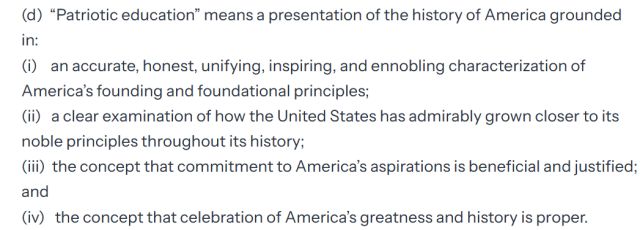
 This not only means a politically motivated distortion of history itself and presumably a serious encroachment on the freedom of scientific historical research, but also a disregard for all the findings of historical didactic research and development. In particular, it may also be a state-prescribed renunciation of one of the central concepts of history teaching in recent decades, namely the ability to think independently – and necessarily critically – as the central goal of learning history at school.